 The SSD Review The Worlds Dedicated SSD Education and Review Resource |
TEST BENCH AND PROTOCOL
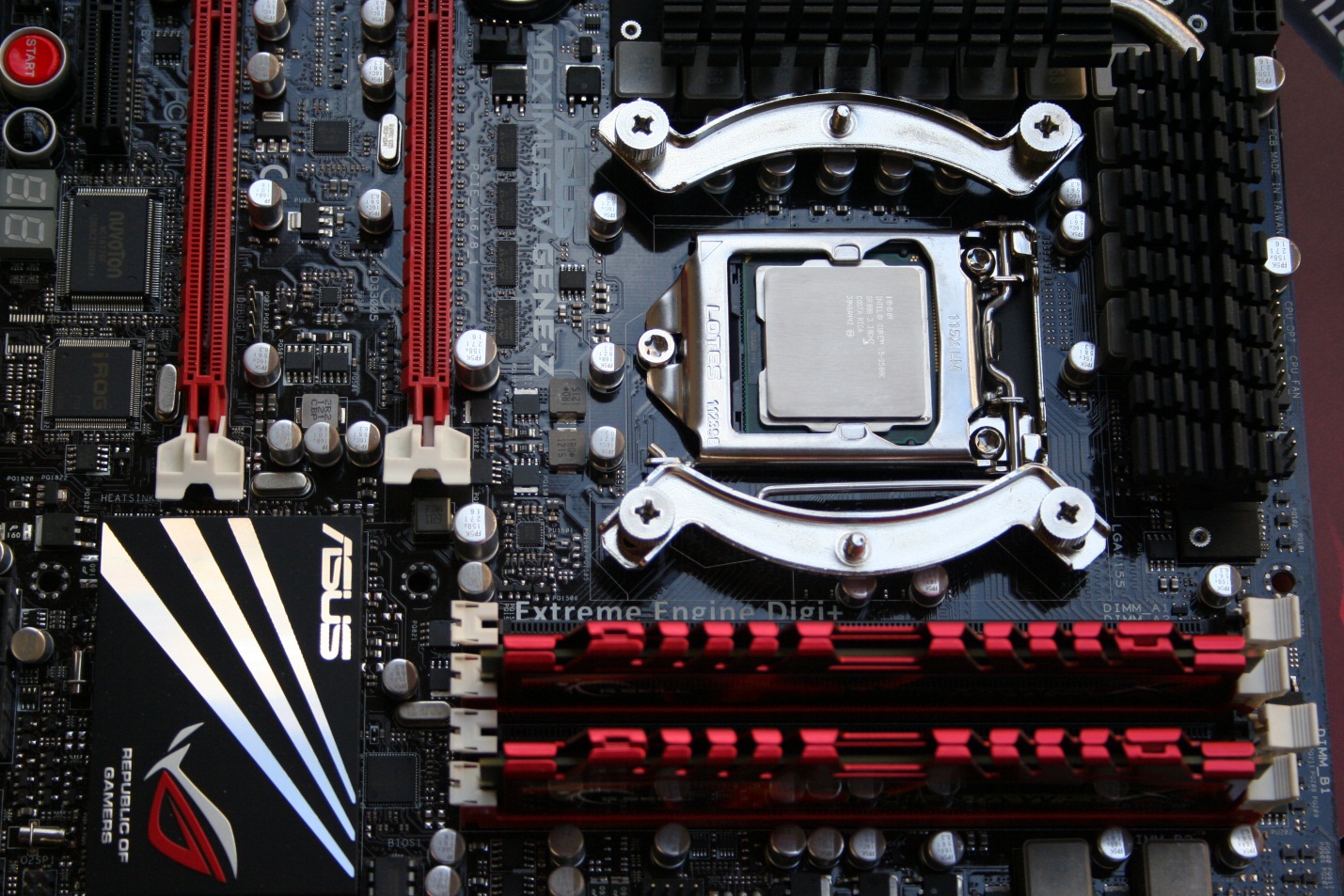 Testing will be performed on an Asus Maximus IV Gene-Z paired with an Intel Core i5 2500K and 8GB of G.Skill DD3 1866. Intel’s Rapid Storage Technology storage drivers version 10.6.0.1002 are used for all testing.
 BENCHMARK SOFTWARE
Software utilized for this review consists of ATTO Disk Benchmark, CrystalDiskMark, AS SSD, Anvil Storage Utilities, and PCMark Vantage. All do a great job of showing us the numbers that we want to see, or don’t want to see in some cases, while PCMark Vantage x64 is an excellent program which recreates tests that mimic the average user’s activity, all the while providing a medium to measure each.
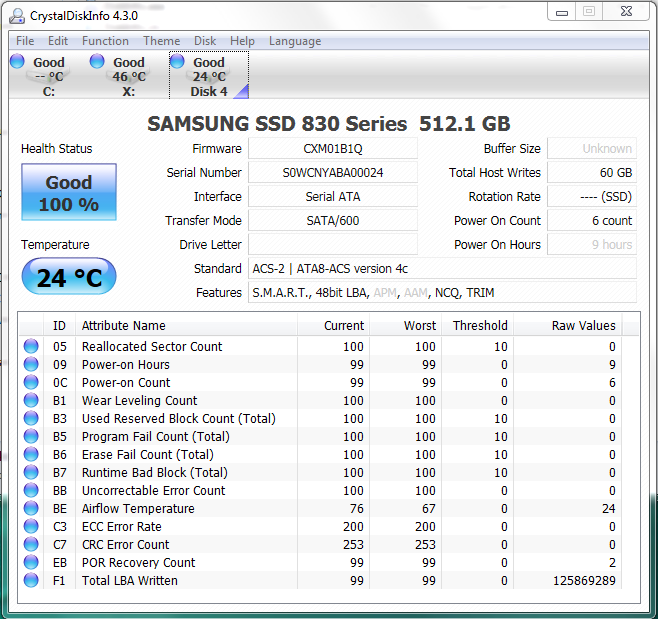 Samsung deserves credit for exposing some fantastic SMART attributes with the 830. In addition to temperature and host write attributes, Wear Leveling Count gives the user and indication of how many program/erase cycles the drive has used. That attribute also includes a “life indicator” which gives the percentage of the drive’s 3000PE cycles used. In this case, the 830 is still at 100%. These types of “media wearout indicators” are notoriously conservative. All in all, it doesn’t lack for much information, something which is much appreciated.
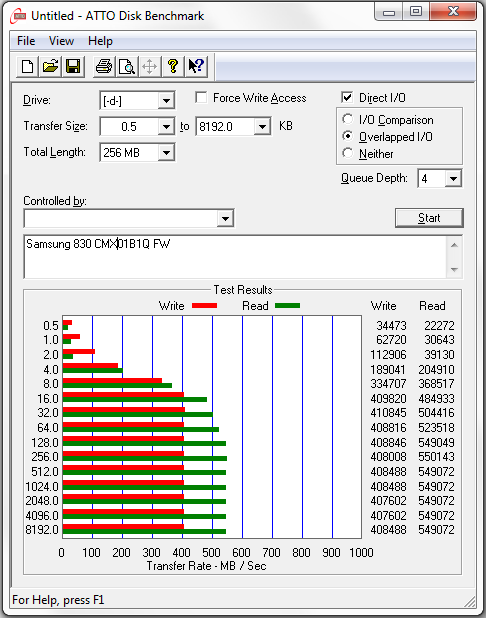 ATTO Disk Benchmark is perhaps one of the oldest benchmarks going and is definitely the main staple for manufacturer performance specifications. ATTO uses RAW data, which removes the file system overhead. For our benchmarks, we use a set length of 256mb and test both the read and write performance of various transfer sizes ranging from 0.5 to 8192kb. Manufacturers prefer this method of testing as it deals with zero-fill data rather than random and shows better performance than benchmarks which operate through the file system.
Samsung states the max sequential speeds of the 830 256GB and 512GB are 520MB/s read and 400MB/s write. The 512GB performs near-identically to the 256GB at 408MB/s writes and 549MB/s reads.
nice review!
512gb is too much. Seriously you can get 128gb SSD. All of your games programs apps will be on that drive. My “documents” musics videos put them on tb drive.
That was an unexpected comment with so many that swear by multi-TB hard drives for all of their storage.
I have a Lenovo T420s on which I run 3 virtual machines, each approx 75Gb in size. I can’t begin to tell you how nice iit is to have speed *and* capacity combined in one!
I love this drive. I have one in my Lenovo T420s and use it t run two Virtual Machines off it. Amazing performance.
However, one thing is important to highlight. Similar to Intel OEM drives, Samsung does not provide support or firmware for OEM drives. They will refer you to OEMS (Dell etc) whenever you need support. Fixes in retail firmware will only reach OEMs when the issues these fixes treat are serious enough. For Samsung drives this has become painfully obvious when PM800 owners had to resort to hacking their drives into retail firmware in order to support TRIM. That very same goes for the PM830. The latest Samsung retail firmware is not available for OEM drives and SSD Magician does not recognize OEM drives as “Genuine Samsung”.
I love the PM830 512Gb drive, but this is an aspect that Samsung really needs to sort!
Not exactly… Intel DOES support their OEM drives with firmware updates, in my experience. I have an x-18m 160 GB OEM from HP that is easily supported and updated with Intels Toolbox…and if I’m not mistaken, Crucial/Micron also allows firmware updates to their OEM drives.
Samsung should do the same…
DELL has a poor technical support.
To be worse DELL refers to Samsung, and Samsung refers to DELL.
A large serious company … and the people doing the jokes
. More can be read here:
https://en.community.dell.com/owners-club/alienware/f/3746/t/19431377.aspx?PageIndex=2
https://forum.notebookreview.com/alienware-m17x/638053-updating-samsung-pm830-firmware-2.html
I’m going to do its part, Dell and Samsung anti-advertising.
According to me they deserve. I also recommend users also overwhelm DELL technical support e-mails Samsung also.
Otherwise, both companies will not do anything with the problem.
The Muss: yes, while 512GB is more then enough for the average user, this drive serves as an excellent replacement for mechanical disks in storage arrays and in server computing. My company uses the 256GB and 512GB model drives in our servers and storage arrays and the performance and value you get is unmatched.
Hey guys I just did a speed test of the Samsung 830 SSD on my 2009 MacBook Pro check it out! https://www.youtube.com/watch?v=gZJ-pPeE5lA&list=UUHjLWNIoRDcgGEa1cLki1Fg&index=1&feature=plcp
This softwareSSD MAGICIAN supports XP which made my purchase happen.
Hello, I’ve bought this SSD a few weeks ago and has tried a few benchmarks with it, and found that my 4k-64 thread read is only 82 MB/s in AS SSD benchmark rather than close to the 267 MB/s as shown in this review. What could be the problem?
Have you tried a CDM benchmark with your system in safe mode? Best advise is hop into the Forums and we can start a running dialogue.